Workshop 2026
Boosting the use of PPB as innovative food and feed ingredients: From metabolism to health-promoting effects
19 – 20th March 2026 | Mons – Belgium
Photo album
Book of abstract
Call for participation
This is a call for participating to the joined workshop organized by the Purple4Life Horizon EU project and the COST action (CA21146) – PURPLEGAIN.
This workshop is the 10th Workshop of PurpleGain and is organised in the frame of WG 1. The workshop will take place the 19-20 March 2026, in Mons – Belgium
We invite participations as well as abstract contributions (for Oral and Pitches presentations) to this interdisciplinary workshop from:
- PhD students & post-doctoral researchers working on PPB-related technologies.
- Professors & academic researchers exploring PPB applications.
- Start-ups & entrepreneurs developing PPB-based products and processes.
- Technology developers & innovators working on PPB solutions for resource recovery.

KEY DATES
Communication and confirmation: 15th of February 2026.
Registration: (Closed) until 15 February 2026
Registration open: 1st of December 2026
Funding deadlines: (Closed) until 31 January 2026
Send your abstract
We are looking for a broad range of PPB-based innovations, including but not limited to:
- Fundamental or applied research on metabolism of PPB
- Strategy to improve PPB productivity both at metabolic and process level.
- Use of PPB high-value feed and protein-rich biomass for aquaculture and livestock.
- Strategy to improve feed quality in aquaculture using natural biomass.
- Natural source of health promoting ingredient boosting CoQ10 metabolism in human
- Functional food and nutraceutical applications, such as antioxidant and carotenoid production.
- Market access for PPB based feed and food product
- Regulatory aspect applying onPPB based feed and food product.
If you have a breakthrough concept, a lab-scale prototype, or a commercial pilot, we want to hear from you!
Abstracts should be a maximum of 350 words outlining your work, technology, solution, or business case, and should include:
- The question your work addresses or the key challenges you tackle.
- Technology/solution/methodology description.
- Main results/observations.
- Conclusion.
- Potential market impact and sustainability benefits.
Contributors and attendees may apply for financial support (see the Financial Support section).
Financial Support
Contributors and attendees may apply for financial support through the COST Action PurpleGain
Program
19th of March
| Time | Title | Speaker |
|---|---|---|
| 9:00–9:30 | Registration | |
| 9:30–9:40 | Opening Remarks | by PURPLE4LIFE |
| Session I: Metabolism for an Improved PPB production | ||
| 9:40–10:40 | Light Capture in PPB: fundamentals and perspectives | Andrew Hitchcock, University of Sheffield, UK |
| 10:40–11:00 | Oral presentation | “Environmental Stress as a Driver of Pigment Modulation in Rhodobacter capsulatus”, by Javier Llamas Saus |
| 11:00–11:30 | Coffee Break | |
| 11:30–12:30 | Oral presentations |
11:30-11:50 – “Bioelectrochemical production of food-grade value-added compounds by Rhodopseudomonas during biogas upgrading”, by María José García López 11:50-12:10 – “Impact of salinity on pigments and antioxidant properties of purple bacteria”, by Sara Olyslaegers 12:10-12:30 – “Effective light management as a lever to improve productivity in purple phototrophic bacteria”, by Salim Kichouh Aiadi |
| 12:30–14:00 | Lunch Break and Poster session | |
| Session II : Regulatory aspect of PPB introduction in feed/food market | ||
| 14:00–14:45 | Road map to the novel food | by Mari Eskola, Medfile |
| 14:45–15:15 | Regulatory path to the feed additive market | by Marta Ponghellini, Consultant in European Legislation on Food Chain and Animal Health, Belgium |
| 15:15–16:00 | From authorisation to official control: Which analytical methods really matter for feed additives? | by Christoph Von Holst, Active Senior at the European Commission´s Joint Research Centre, Belgium |
| 16:00–16:30 | Round table on regulatory challenges – policy evolution | by Mari Eskola (Medfile), Marta Ponghellini (European Legislation on Food Chain and Animal Health), and Christoph Von Holst (European Commission´s Joint Research Centre) |
| 16:30–16:45 | Coffee Break | |
| 16:45–17:45 | Oral presentations |
16:45-17:05 – “Safety Evaluation of Purple Phototrophic Bacteria Biomass Using In Vitro and In Silico Methods”, by Beatrice Aiuto 17:05-17:25 – “Checking the environmental relevance of bacterial biomass as a food product – LCA in the PROTEBoost project”, by Olivier Talon 17:25-17:45 – “Directed evolution for improving[GB1.1][BL1.2][BL1.3] the upcycling of glucose-rich by-products using phototrophic purple bacteria”, by Manon Gilson |
| 17:45–18:15 | Poster Pitches |
17:45-17:50 – “Redefining Molasses for Rhodospirillum rubrum Biomass Production: Metabolic 17:50-17:55 – “Electro-stimulation of Rhodopseudomonas palustris 42OL for biosynthesis of High-Value Bio 17:55-18:00 – “Purple Phototrophic Bacteria (PPB) production from fermented wine lees: an insight into polyhydroxyalkanoates and pigments synthesis”, by Aditi Parmar Chitharanjan 18:00-18:05 – “Integrating purple non-sulfur bacteria for agro-industrial waste valorization: optimization of biomass and hydrogen production”, by Karima Guehaz 18:05-18:10 – “Engineering Microbial Selectivity: Operational Strategies for PNSB-Based Resource Recovery in Open Systems”, by Parashant Anand |
| 19:00 | Walking dinner and networking | |
20th of March
20th of March
| Time | Title | Speaker |
|---|---|---|
| 9:00–9:30 | Registration | |
| Session I: PPB and Feed Product | ||
| 9:30–10:30 | Innovative ingredient for improving feed in aquaculture | by Katerina Kousoulaki, Nofima, Norway |
| 10:30–10:50 | Oral presentation (selected abstract) | “Improved color, health and nutrition of ornamental fish fed with purple bacteria”, by Luis Díaz Allegue |
| 10:50–11:10 | Coffee Break | |
| 11:10–12:30 | Oral presentations (selected abstracts) | 11:10–11:30 – “A dish with no fish: How DHA-free microalgae and linseed oil enhance n-3 LC-PUFA biosynthesis in rainbow trout (Oncorhynchus mykiss)”, by Anna Simon 11:30–11:50 – “Tailoring Egg Lipids Through Hen Nutrition: Human Health Effects and Opportunities for Novel Lipid Sources”, by Emeline Dierge 11:50–12:10 – “Diet composition and environment interact and control flesh color in salmon”, by Trine Ytrestoyl 12:10–12:30 – “Valorisation of Food Industry By-Products for Single-Cell Protein Production”, by Liudmyla Fihurska |
| 12:30–13:30 | Lunch Break and Poster session | |
| Session II: PPB as Human Health-Promoting Ingredient – Added Value of Microbial Biomass | ||
| 13:30–14:30 | CoQ10 and human health | by Plácido Navas, UPO, Spain |
| 14:30–15:10 | Oral presentations (selected abstracts) |
14:30–14:50 “Vitamin B12 production in Purple Non-Sulfur Bacteria: Impact of autotrophy versus heterotrophy and anaerobic versus aerobic conditions”, by Naïm Blansaer 14:50–15:10 – “Lipid extraction and Coenzyme Q10 quantification in purple phototrophic bacteria”, by Daniel José Moreno Fernández-Ayala |
| 15:10–15:30 | Coffee Break | |
| 15:30–16:30 | Oral presentations (selected abstratcs) |
15:30–15:50 – “Purple phototrophic bacteria as a sustainable protein source: bioaccessibility and functional responses during in vitro digestion”, by Malou Nuyts 15:50–16:10 – “Optimising spraydrying to maximise antioxidant capacity in purple bacterial biomass”, by Rosaria Tizzani |
| 16:30–18:00 | Concluding remarks and networking drink | |
Speakers

Andrew Hitchcock
Royal Society Research Fellow/ Lecturer of School of Biosciences. University of Sheffield, UK

Mari Eskola
Dr, Senior Regulatory Affairs Expert at Medfiles, Finland

Katerina Kousoulaki
Senior researcher in nutrition at Nofim, Norway

Christoph von Holst
Active senior at the European Commission, Joint Research Centre, Geel, Belgium
From authorisation to official control: Which analytical methods really matter for feed additives?
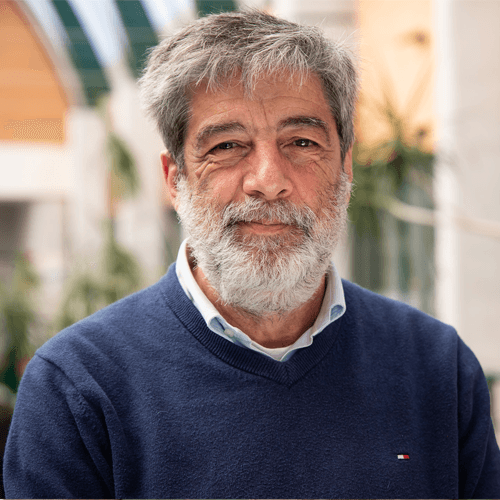
Plácido Navas
Senior researcher. Andalusian Centre for Developmental Biology (CABD) UPO

Marta Ponghellini
Deputy Head of Unit in the Animal Nutrition-Veterinary Medicines division at the DG SANTE
Dr. Marta Ponghellini
Venue
All conferences will take place on the campus “Plaine de Nimy” of UMONS, in building Vésale, avenue du champs de mars 6, 7000 Mons, Belgium
If your flight arrives at Charleroi Airport (Brussels South)
If you arrive at Brussels South Charleroi Airport, you have two main options to reach Mons.
- Shuttle Service: The most affordable is a shuttle bus service that connects the airport directly to Mons in approximately 50 minutes, with a ticket price of €13.50. Once you arrive at the drop-off point in Mons, it takes about 15 to 20 minutes on foot to reach the city centre. More information: https://www.flibco.com/en.
- Taxis: Alternatively, taxis and ride-sharing services are available for a faster, though more expensive, journey. Prices generally range between €50 and €100 depending on the time and provider. Advance booking is strongly recommended. We can recommend Navette Devos. (based in Mons).
If your flight arrives at Brussels Airport
- Train: If your flight lands at Brussels Airport, you can take a direct train to Mons departing straight from the airport, with services running approximately every hour. The train ride takes about 1 hour and 15 minutes, and a standard adult ticket costs around €25. You can consult schedules and purchase tickets via the SNCB website.
- Shuttle Service or Taxi: Shuttle services or taxis are also available. Prices and availability may vary and advance booking is strongly recommended. We can recommend Navette Devos.
UMONS recommends the following hotels, conveniently located in or near the city centre
Van der Valk Hotel Mons Congrès & Spa
Located just outside the city centre, the Van der Valk Hotel Mons Congrès is ideally situated right across from the new Mons railway station. It is a 15-minute walk or a short 5-minute drive from the meeting location.
Address: Avenue Mélina Mercouri 7, 7000 Mons
Hotel B&B centre
Located near the city centre, within a 5-minute walking distance from the meeting location and about a 15-minute walk from the train station.
Address : Rue des Arbalestriers, 112 – 7000 Mons
Website: B&B HOTEL Mons Centre: a comfortable hotel in the centre of Mons
Bookings: bb_7518@hotelbb.com.
Martin’s Dream Hotel**
A charming 4-star hotel located in the heart of Mons’ historic city centre within a 13-minute walking distance from the meeting location and from the train station.
Address: Rue de la Grande Triperie 17, 7000 Mons
Website: Martin’s Dream Hotel
More information
For further information you may contact,
- Baptiste Leroy, WG1 leader, baptiste.leroy@umons.ac.be
- Dr. Raul Muñoz Torre, Grant Awarding Coordinator mutora@iq.uva.es
- Dr. Daniel Melchor Puyol Santos – Chair puyol@urjc.es
- Joana Fradinho – Vice-Chair j.fradinho@campus.fct.unl.pt
- Dr. Ioanna Vasiliadou – Training Schools Coordinator ivasiliadou@uowm.gr