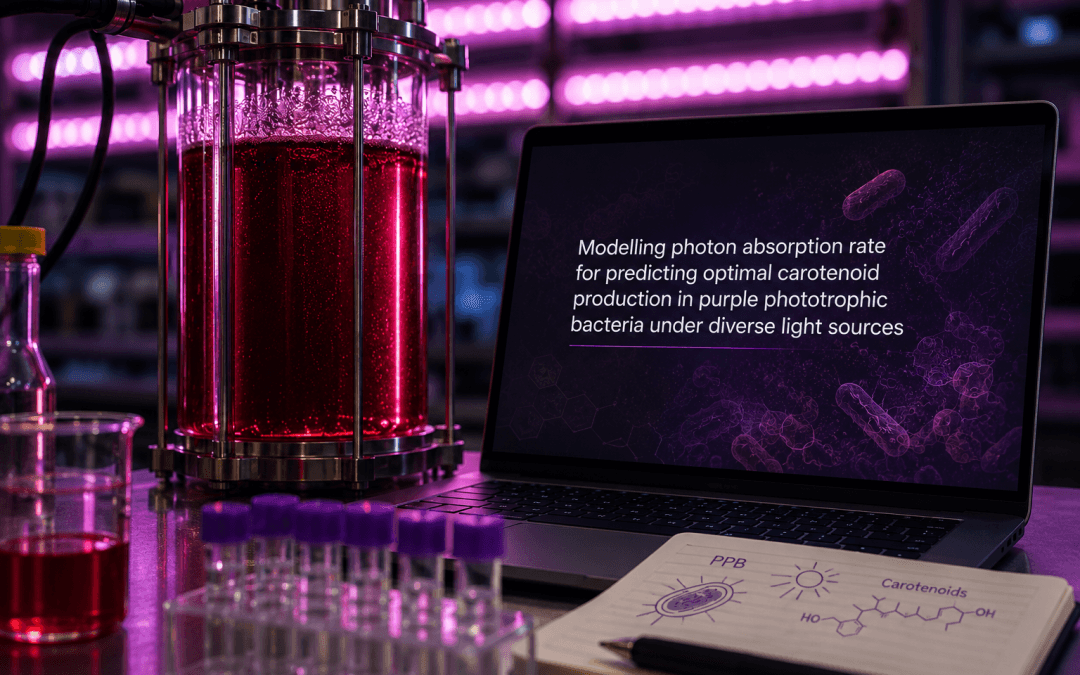
A new research article authored by members of the PURPLE4LIFE consortium has been published in Bioresource Technology, addressing one of the central questions in the development of purple phototrophic bacteria (PPB) as a source of high-value compounds: how these...
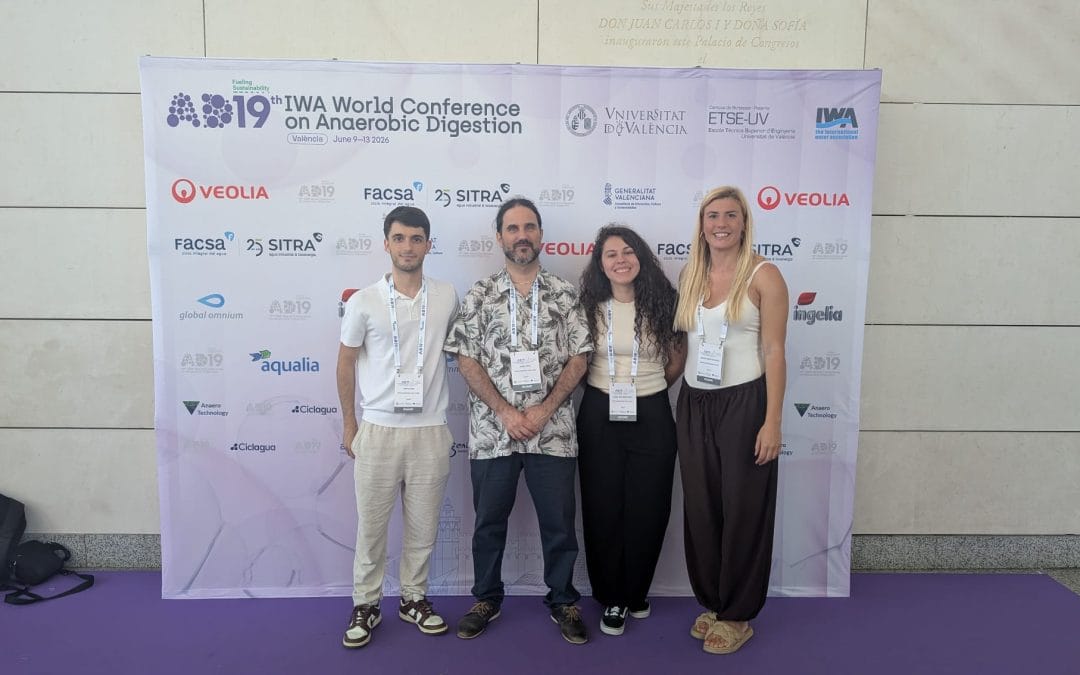
The 19th IWA World Conference on Anaerobic Digestion (IWA AD19) was held in Valencia, Spain, from 9 to 13 June 2026, bringing together international experts in anaerobic digestion and resource recovery. The event included participation from the Universidad Rey Juan...
Project Technology Highlight: Scaling Up Purple Bacteria Production at UMONS
Building on our previous update about the bag culture system being developed at the Université de Mons (UMONS), we are happy to share that significant progress has been made over the last months. The ProtMic team has successfully advanced the cultivation of purple non-sulfur bacteria (PNSB) from laboratory bottles toward a robust intermediate production stage, marking an important step on the road to pilot-scale operation.
What is being developed
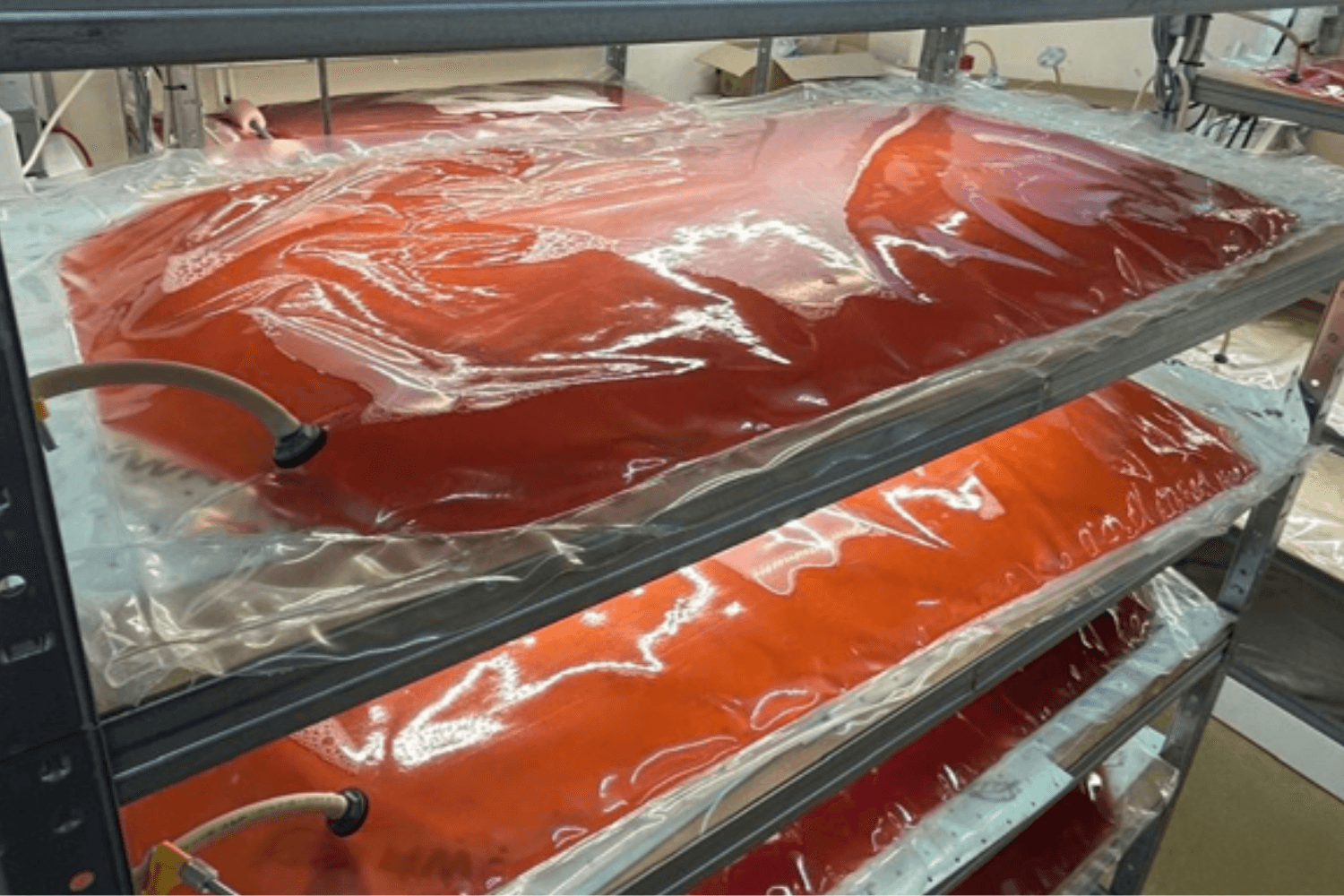
At UMONS, we are currently scaling up the production of purple bacteria using Rhodospirillum rubrum, one of the most promising PNSB strains for valorizing agri-food by-products into high-value biomass. This strain has shown excellent performance in our culture conditions, combining robust growth with a rich profile of bioactive compounds, including high-quality protein, CoQ10, and natural carotenoids.
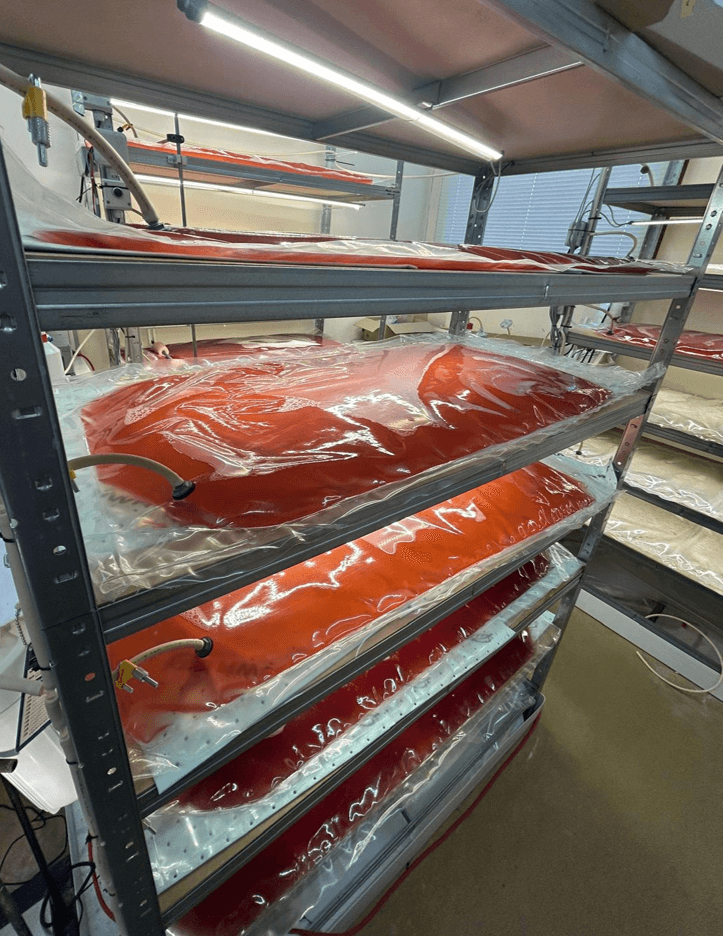
Thanks to the iterative optimization of our bag culture system, we have now reached an installed production capacity of 250 L, a major step up from the laboratory-scale volumes used at the beginning of the project. At this scale, the team is consistently achieving a productivity of approximately 0.6 g/L per day, a figure that confirms the viability of the bag culture approach as a cost-effective and scalable production platform.
Overcoming the scale-up challenges
Reaching this milestone has not been straightforward. Moving from small, tightly controlled flasks to 250 L bag cultures brought a series of technical challenges that the team has had to identify, understand, and solve one by one. Among the main hurdles encountered were:
• Maintaining homogeneous light penetration in deeper, denser cultures, which required adjustments to bag volume and illumination.
• Ensuring efficient mixing while preserving the anaerobic conditions required by Rhodospirillum rubrum.
• Preventing contamination during long production runs, which became more critical as volumes increased.
Each of these issues was tackled through targeted experiments and design iterations, and the cumulative improvements have translated into stable, reproducible cultivation runs at the current 250 L scale.
Why it matters
The fact that we are now able to consistently produce high-quality biomass at this volume is a key enabler for the entire project. The biomass currently being generated retains a strong nutritional and functional profile, with the bioactive content needed for both feed formulation and human nutrition studies. This reliable supply is what allows our consortium partners to move forward with their downstream activities, from safety and allergenicity assessments to feeding trials in salmonids and CoQ10 supplementation studies in humans.
In other words, every liter produced at UMONS is a building block for the science that follows.
Team perspective
For the ProtMic team, reaching the 250 L mark with Rhodospirillum rubrum is more than a technical achievement; it is the validation of a long iterative process in which problem-solving, process engineering, and microbial physiology have come together. We are particularly proud that the quality of the biomass has been maintained, and in some aspects improved, as the scale has grown. This sets a solid foundation for the next phase.
What comes next
The immediate priorities are clear: further increase productivity, continue optimizing the bag culture configuration, and progressively expand installed volumes as we move toward true pilot-scale operation within the project timeline. In parallel, the stability of CoQ10 and other bioactives will continue to be monitored throughout production and downstream processing, to make sure that what reaches our partners is consistent batch after batch.
With production now well established at 250 L, the bridge between laboratory science and real-world applications is becoming increasingly tangible.
By
Salim Kichouh Aiadi (UMONS)
Manage Consent
To provide the best experiences on purple4life.eu, we use technologies like cookies to store and/or access device information. Consenting to these technologies allows us to process data such as browsing behaviour or unique identifiers on this website. Not consenting or withdrawing consent may adversely affect certain features and functionalities.
Functional
Always active
The technical storage or access is strictly necessary for the legitimate purpose of enabling the use of a specific service explicitly requested by the subscriber or user, or for the sole purpose of carrying out the transmission of a communication over an electronic communications network.
Preferences
The technical storage or access is necessary for the legitimate purpose of storing preferences that are not requested by the subscriber or user.
Statistics
The technical storage or access that is used exclusively for statistical purposes.The technical storage or access that is used exclusively for anonymous statistical purposes. Without a subpoena, voluntary compliance on the part of your Internet Service Provider, or additional records from a third party, information stored or retrieved for this purpose alone cannot usually be used to identify you.
Marketing
The technical storage or access is required to create user profiles to send advertising, or to track the user on a website or across several websites for similar marketing purposes.