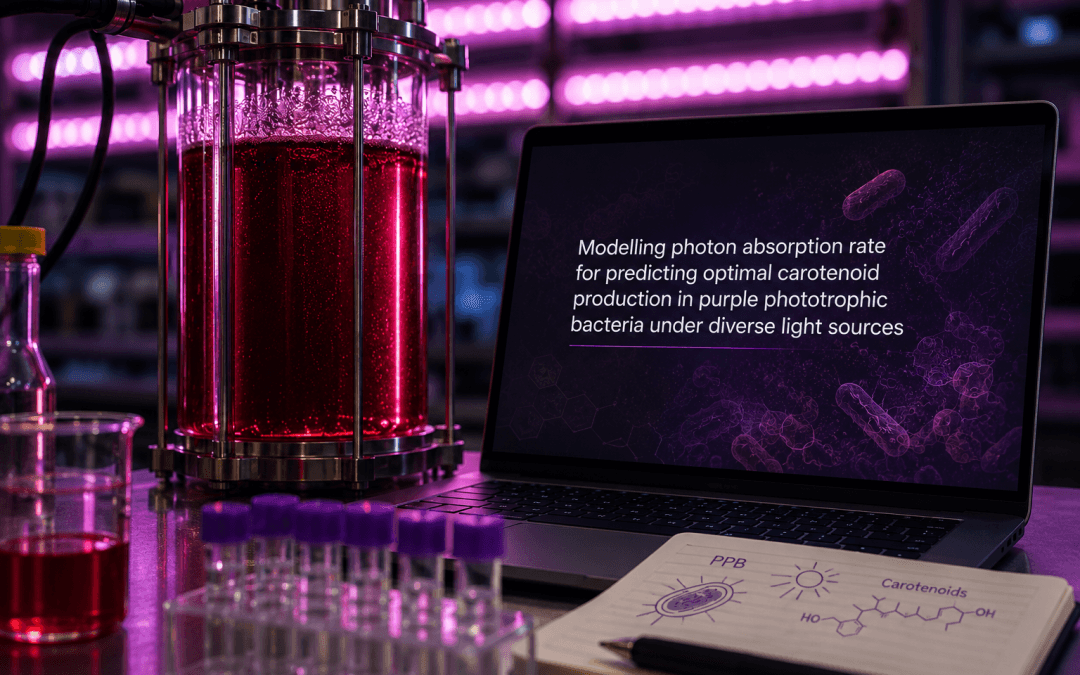
A new research article authored by members of the PURPLE4LIFE consortium has been published in Bioresource Technology, addressing one of the central questions in the development of purple phototrophic bacteria (PPB) as a source of high-value compounds: how these...
The 19th IWA World Conference on Anaerobic Digestion (IWA AD19) was held in Valencia, Spain, from 9 to 13 June 2026, bringing together international experts in anaerobic digestion and resource recovery. The event included participation from the Universidad Rey Juan...
Within the European project Purple4Life, our team at the University of Antwerp studies how purple phototrophic bacteria can support sustainable, circular bioprocesses. These microbes are metabolically versatile, but their real value will depend on knowing exactly which conditions trigger the formation of high-value antioxidants.
My name is Arianna Reolon, and my PhD is centred on identifying those conditions. Our goal is to establish robust cultivation principles that move PPB-derived antioxidants from an interesting laboratory result to a credible, evidence-based biotechnological route.
What is being developed
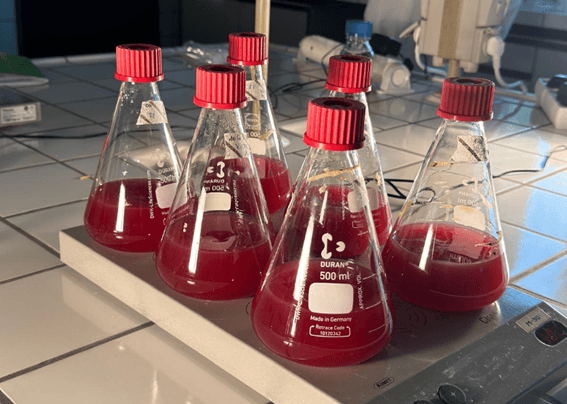
In my first experiments I am developing a two-stage cultivation strategy using Cereibacter sphaeroides and Rhodobacter capsulatus strains isolated in-house. In the first stage, cultures are grown to late exponential phase under conditions that favour rapid and efficient biomass formation. In the second stage, the culture is shifted to a controlled stress environment to stimulate the synthesis of high-value antioxidants, particularly carotenoids and coenzyme Q10.
Why it matters
Carotenoids and coenzyme Q10 already play recognized roles in human and fish health. Carotenoids support antioxidant defense and immune function, while coenzyme Q10 contributes to mitochondrial energy balance and cardiovascular resilience. In aquaculture, these molecules improve pigmentation, growth and stress tolerance. Yet most current supplies come from synthetic or resource-intensive sources. If PPB can produce them efficiently from circular carbon streams, they offer a cleaner, more sustainable route to compounds with proven biological value.
Team perspective
Our team is motivated by developing microbial products that can genuinely serve society. We do not focus solely on production. We work at the interface of microbial biotechnology and sustainability, so our interest in PPB goes far beyond producing colorful molecules, we also examine potential applications in health, nutrition and other sectors, ensuring that any advances in cultivation can be translated into meaningful use cases. Importantly, we challenge ourselves to remain evidence-driven. Many microbial products sound promising on paper. Our task is to test which ones actually perform, which ones can be produced consistently, and which ones can meet regulatory and safety expectations. The aim is not to add another exotic microbe to the literature but to build credible routes that could underpin future bio-based industries.
What comes next
Next, we will cultivate PPB mixotrophically using CCU-derived organics such as ethanol or lactic acid to increase carbon efficiency. In parallel, we will evaluate greener extraction and quantification methods and begin mapping which applications these antioxidant-rich biomasses are best suited for.
To provide the best experiences on purple4life.eu, we use technologies like cookies to store and/or access device information. Consenting to these technologies allows us to process data such as browsing behaviour or unique identifiers on this website. Not consenting or withdrawing consent may adversely affect certain features and functionalities.
Functional
Always active
The technical storage or access is strictly necessary for the legitimate purpose of enabling the use of a specific service explicitly requested by the subscriber or user, or for the sole purpose of carrying out the transmission of a communication over an electronic communications network.
Preferences
The technical storage or access is necessary for the legitimate purpose of storing preferences that are not requested by the subscriber or user.
Statistics
The technical storage or access that is used exclusively for statistical purposes.The technical storage or access that is used exclusively for anonymous statistical purposes. Without a subpoena, voluntary compliance on the part of your Internet Service Provider, or additional records from a third party, information stored or retrieved for this purpose alone cannot usually be used to identify you.
Marketing
The technical storage or access is required to create user profiles to send advertising, or to track the user on a website or across several websites for similar marketing purposes.