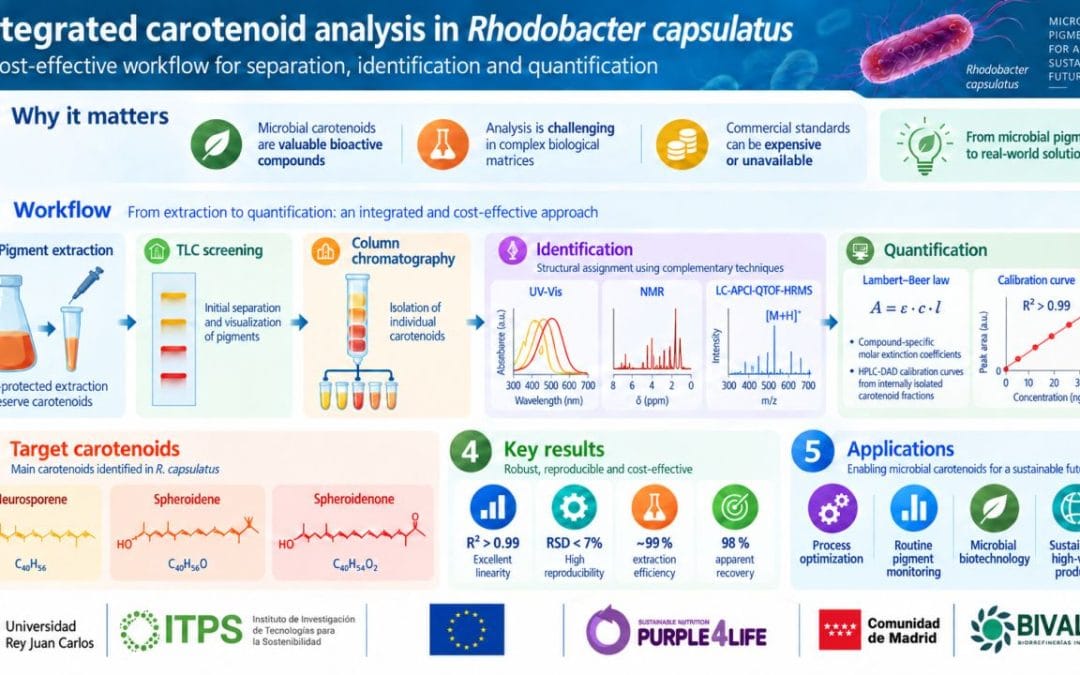
Researchers from Universidad Rey Juan Carlos, working within the Purple4Life consortium, have published in MethodsX an integrated analytical workflow for the extraction, isolation, identification and quantification of carotenoids produced by Rhodobacter capsulatus....
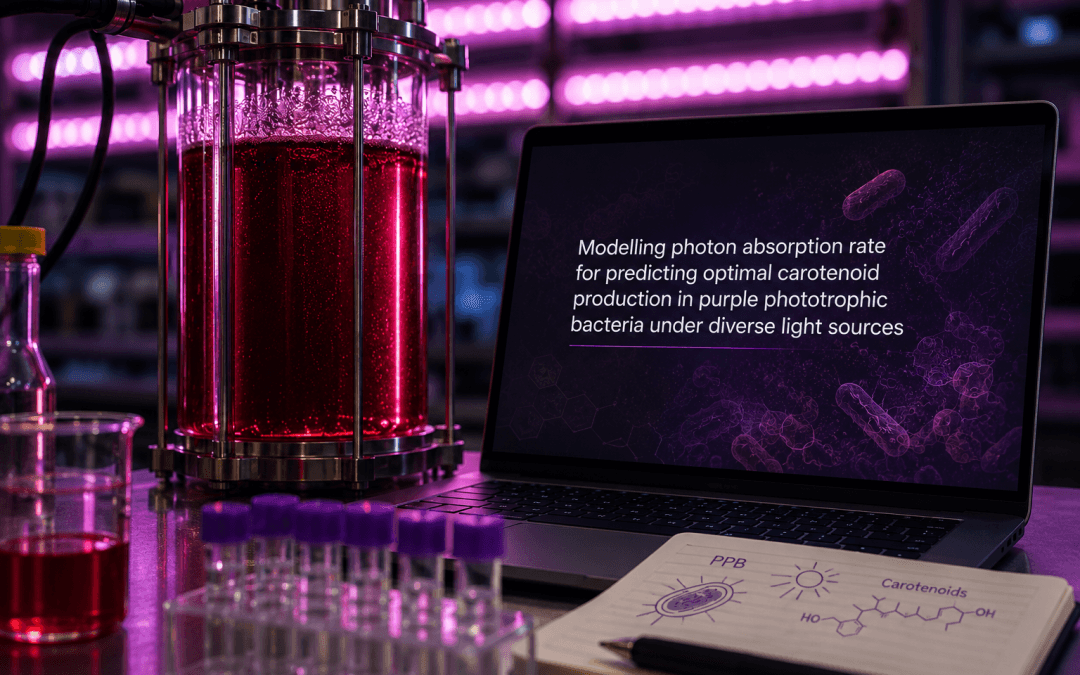
A new research article authored by members of the PURPLE4LIFE consortium has been published in Bioresource Technology, addressing one of the central questions in the development of purple phototrophic bacteria (PPB) as a source of high-value compounds: how these...
Within the framework of the Purple4Life project, CNR is developing a safety assessment workflow for PPB, focusing on their suitability as innovative food and feed ingredients
What is being developed
CNR is developing and applying protein allergenicity assessment methodologies to PPB by integrating complementary in silico and in vitro approaches. These methodologies include bioinformatic screening of protein sequences for homology to known allergens, alongside experimental validation using laboratory-based assays. As part of this work, we are currently establishing and optimizing extraction protocols for the recovery of total protein content from four strains of Rhodobacter capsulatus, Rhodobacter sphaeroides, and Rhodospirillum rubrum, ensuring reproducibility and suitability for downstream allergenicity analyses.
Why it matters
Ensuring the safety of PPB is essential to unlock their full potential as sustainable biotechnological resources. PPB play a key role in circular economy solutions by converting waste streams and industrial by-products into high-value biomolecules and innovative food and feed ingredients. Establishing rigorous safety evidence is critical to meet EU regulatory requirements, build consumer and stakeholder trust, and facilitate future market uptake of PPB-derived products across multiple sectors.
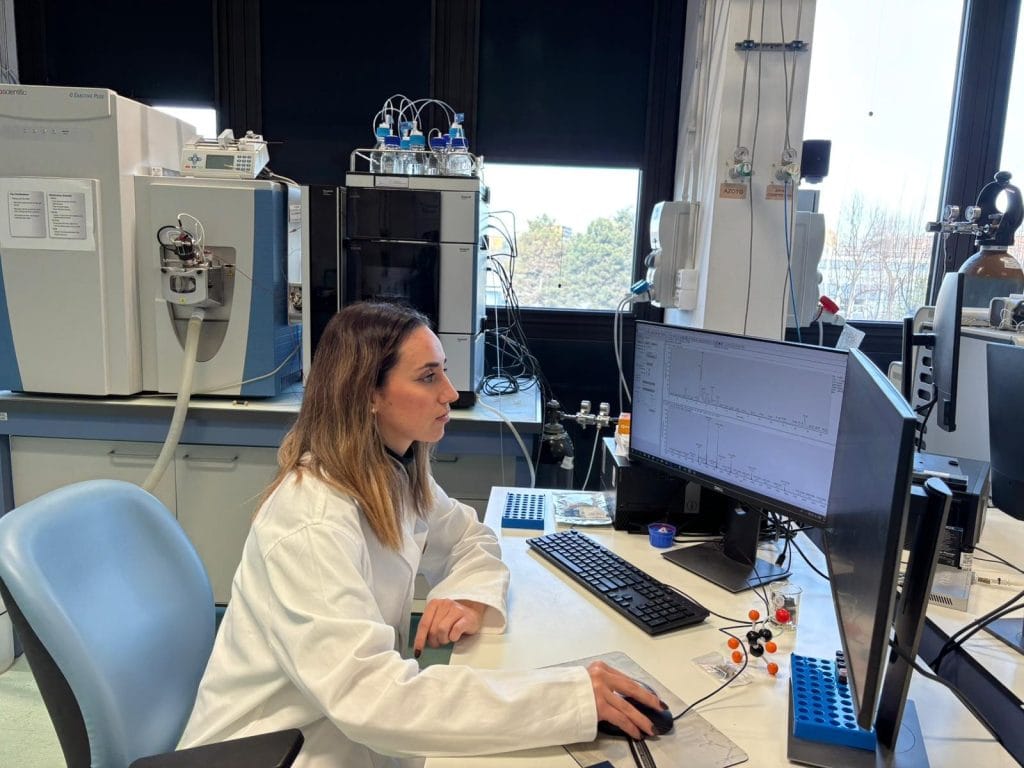
Dr. Beatrice Aiuto, postdoctoral researcher at ISPA CNR, conducting high-resolution LC–MS/MS–based protein analysis.
Team perspective
Our team is committed to ensuring that PPB can be safely and effectively introduced as innovative food and feed ingredients by generating robust, science‑based evidence on their safety. We aim to build a solid foundation that supports both scientific credibility and future regulatory approval.
What comes next
Next, we will characterize the PPB protein profile by electrophoresis systems and high-resolution LC MS/MS instruments, supported by advanced bioinformatics for protein identification. This will allow applying in silico pipeline to screen PPB proteins for sequence similarity to known allergens.
Laura Cavallarin (CNR)
Manage Consent
To provide the best experiences on purple4life.eu, we use technologies like cookies to store and/or access device information. Consenting to these technologies allows us to process data such as browsing behaviour or unique identifiers on this website. Not consenting or withdrawing consent may adversely affect certain features and functionalities.
Functional
Always active
The technical storage or access is strictly necessary for the legitimate purpose of enabling the use of a specific service explicitly requested by the subscriber or user, or for the sole purpose of carrying out the transmission of a communication over an electronic communications network.
Preferences
The technical storage or access is necessary for the legitimate purpose of storing preferences that are not requested by the subscriber or user.
Statistics
The technical storage or access that is used exclusively for statistical purposes.The technical storage or access that is used exclusively for anonymous statistical purposes. Without a subpoena, voluntary compliance on the part of your Internet Service Provider, or additional records from a third party, information stored or retrieved for this purpose alone cannot usually be used to identify you.
Marketing
The technical storage or access is required to create user profiles to send advertising, or to track the user on a website or across several websites for similar marketing purposes.